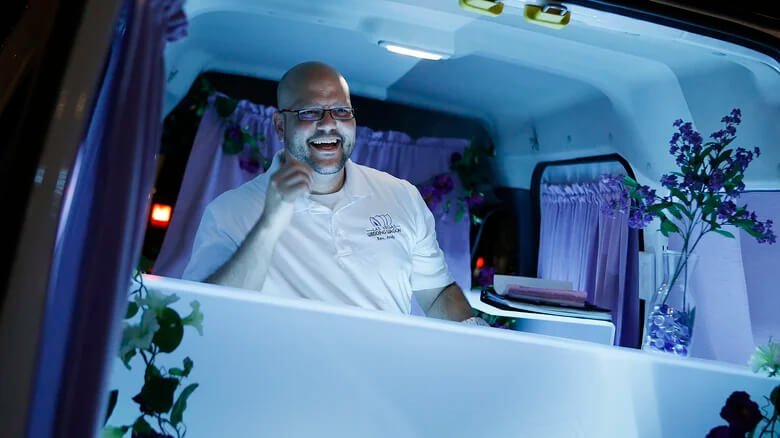
Let’s kill a myth right now: Not every Shark Tank hopeful walks away with a pile of Shark money and a happy ending. Take the Las Vegas Wedding Wagon, for example. This business punched through the noise—a mobile wedding chapel on wheels, offering quick, affordable ceremonies right on the Vegas Strip. It turned heads, sparked a ton of hustle-driven debates, and waltzed right onto Season 6 of Shark Tank. The hype was real. So, who built this thing, what got the Sharks interested, and, honestly, where’s the money now? Let’s get into it.
2. The Founders: James Cass and Adrian Gonzalez Step Up
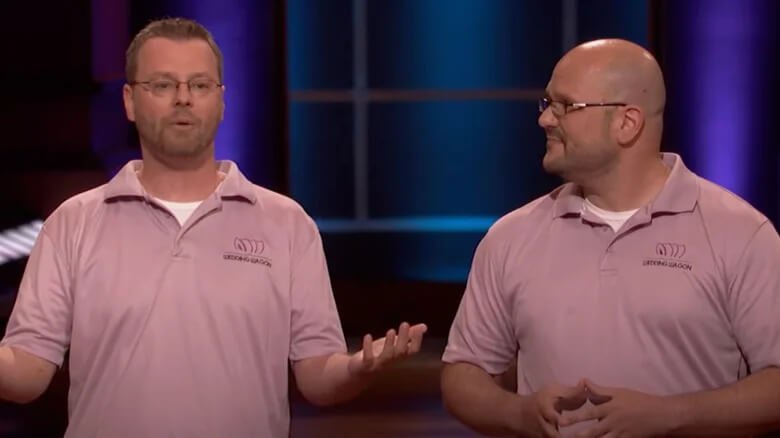
Forget suits and MBAs. James Cass and Adrian Gonzalez were boots-on-the-pavement reverends who saw a wide-open gap in Vegas’s wedding scene. I’ve met my share of idea guys, but these two had hustle. They weren’t looking for a payout or viral fame. They just saw too many couples getting ripped off by expensive chapels, so they rolled up with the Wedding Wagon and started marrying folks wherever they wanted—in parks, on sidewalks, you name it.
Here’s what most people skip: street smart > book smart. These guys had the right instinct for a pain point in Vegas—a town built on the idea of fast, easy, and no questions asked. Cass and Gonzalez didn’t pitch a gimmick; they solved a real problem.
3. How Wedding Wagon Works: Quick, Cheap, Legit
Let’s talk product. Wedding Wagon was a direct-to-consumer play before DTC was cool: a wedding, delivered straight to your spot, with no frills and no hidden fees. Couples call, book a van, and—boom—within hours a licensed officiant shows up at your dream spot with a photographer and all legal paperwork in hand.
The price? $129. That’s not a typo. For around the cost of dinner and drinks at a Vegas casino, you walk away legally hitched, with a professional photo gallery and no stress. Need a witness? They brought one. All the basics, no smoke, no mirrors. Their model? Volume, velocity, and simplicity. If you’ve ever watched someone sweat through a wedding cost spreadsheet, you know how big this is.
4. Numbers on the Table: Revenue, Traction, Net Worth
Let’s skip the hype and get straight to what matters: money. Before Shark Tank, the Wedding Wagon had already pulled in $243,000 in revenue. They were running 6–8 weddings per day—sometimes more, because, well, this is Vegas.
So, was this just a side gig? Not even close. According to market sleuths like SharkWorth, by 2023 reports, Wedding Wagon was pulling in somewhere between $1–2 million per year in gross revenue. That’s not unicorn status, but it’s real, bankable money built on solving a niche pain point. Net worth swings depending on who you ask, but the business has flirted with low-to-mid seven figures, thanks to low overhead and repeatable execution. Why did the Sharks perk up? Simple math: low cost, high turnover, big market, endless foot traffic.
5. Inside the Shark Tank Pitch
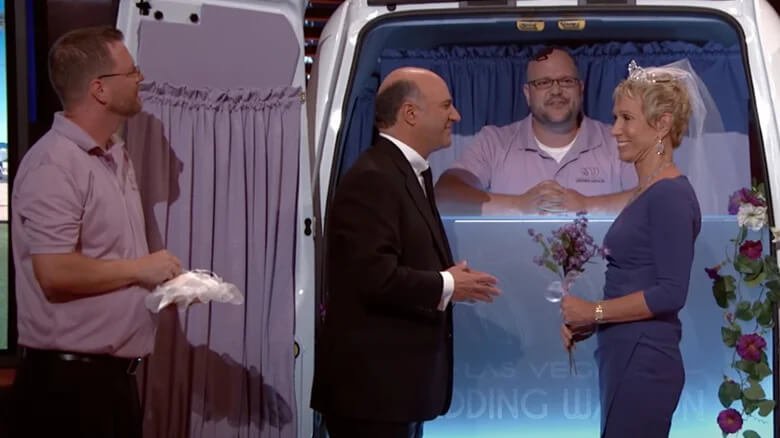
Now, onto the pitch. Cass and Gonzalez walked into Shark Tank looking for $125,000 for a 20% stake. Standard math if you believe in your growth. But here’s where it got clever—the founders staged a mock wedding right on set, marrying Kevin O’Leary to Barbara Corcoran, veil, bouquet, dollar-bill ring and all. Cheesy? Yeah. Memorable? 100%. It wasn’t just a stunt—it gave the Sharks (and viewers) a simple visual of the entire offering in under two minutes.
Slick move. I’ve seen founders freeze up on that carpet—these two made it look fun. The best founders sell you on why it works without a five-page deck, and that’s exactly what they did.
6. Sharks’ Reactions: Why Every Offer Fell Flat
Real talk: The mock wedding cracked up the room, but as soon as the numbers hit the table, the smiles faded. Why? Ownership and licensing disasters—every Shark’s nightmare.
Cass and Gonzalez admitted they’d sold the operational rights for their own Vegas outpost. That sent Mark Cuban and Lori Greiner running. If you don’t own your core business, you’re basically selling smoke. Robert Herjavec spelled out another concern—if the brand’s split between multiple licensees, how do you scale? Hint: You usually can’t.
Kevin and Barbara, still wearing their wedding smiles, passed for the same reasons. Bottom line: It wasn’t about the product, it was about the mess behind the curtain. As an operator, I can tell you—investors don’t get paid on good vibes, they get paid on clean cap tables and smart contracts.
7. After Shark Tank: Did Wedding Wagon Survive the Wild Ride?
This is where most businesses drown, but Wedding Wagon kept rolling. The TV letdown didn’t kill their drive. They kept the vans rolling, kept the price low, and kept getting calls from couples who just wanted to get married—no drama, just legal and quick. There’s a lesson: sometimes you get the Shark, sometimes you stay in the game and grind it out.
Like I’ve seen with other post-Shark Tank brands—some that got deals, some that didn’t—it’s not always about the show. It’s about what you build after the cameras cut.
8. Current Status: Where Is Wedding Wagon Now?
So let’s get to the straight-up update. According to sources like SharkWorth and scattered business reviews, as of 2023 the Las Vegas Wedding Wagon is still cruising the boulevards of Vegas. Still offering ceremonies. Still filling a niche for quick, cheap, and simple weddings.
Who’s behind the wheel? It’s changed hands—Cass and Gonzalez reportedly sold the operating rights a while back—but the model hasn’t changed much. The business isn’t nearly as loud as it was after Shark Tank, but the bookings are steady. You can still book a package, still get married just about anywhere in Vegas for less than the price of your hotel room.
If you’re an operator, you know what this means: the model sticks. It’s not viral, it’s not a tech unicorn. But it’s cash in the door, steady and dependable.
9. Conclusion: Lessons from the Wedding Wagon Hustle
Here’s the real story—the takeaways for founders and would‑be hustlers eyeballing the wedding niche or the Shark Tank express lane.
First, know what you own. Licensing? It’s a time bomb if you don’t control your core market. Clean paperwork and tight control impress investors more than TV antics. Second, solve a real pain point. This wasn’t a vanity play—Wedding Wagon gave couples what they wanted, fast and cheap, without the Vegas upsell.
Third, never bet on a Shark Tank appearance as your endgame. Real companies survive on hustle, repeat business, and ironclad operational basics. Shark Tank didn’t kill Wedding Wagon—if anything, that dramatic no deal moment made their story more authentic, more blue-collar. They’re still standing, wheels still turning, cash still coming in. Madness? Sure. But it works.
FAQs
1. Is Las Vegas Wedding Wagon Still in Business?
Yes, as of 2023, Wedding Wagon is still rolling around Vegas and couples can book simple, fast ceremonies.
2. Did Wedding Wagon Get a Deal on Shark Tank?
No deal. All five Sharks passed, mostly due to the messy licensing/ownership drama.
3. Who Owns Wedding Wagon Now?
Cass and Gonzalez sold operating rights before/during their Shark Tank pitch. The business is now owned by new operators.
4. How Much Is Wedding Wagon Worth Today?
Current net worth hovers between low-to-mid seven figures, with estimated annual revenues of $1–2 million (see SharkWorth).
5. What Do Wedding Wagon Packages Include?
Baseline package: officiant, your choice of location in Vegas, pro photos, legal paperwork, witnesses—about $129 plus your marriage license.
6. Can You Still Book a Mobile Wedding in Vegas?
Yup. Wedding Wagon is rolling, and there are copycats too. But they’re still the OG for fuss-free, rolling weddings.
7. What Are the Biggest Lessons From Their Shark Tank Pitch?
Own your business. Simple pitch sells best. Solve a real problem. The rest is just noise and camera lights.
8. How Are Couples Reviewing the Experience Now?
Still strong. Couples praise the price, stress-free vibe, and friendly officiants—fast and real, just like they promised.
If you want the full story, and every gritty update on real businesses after the TV lights turn off, keep your eye on sites like SharkWorth for the financials and honest operator talk—because the real game doesn’t stop after the pitch.